Tinnitus & Vertigo Treatment in Noida

Tinnitus and vertigo are two of the more distressing ear-related symptoms a person can experience. Tinnitus — a persistent ringing, buzzing or hissing heard without an external sound — and vertigo — the sensation that the world is spinning — can each significantly disrupt daily life. At Dr. Mitva ENT Clinic, both are evaluated with a structured clinical approach to identify the underlying cause and plan appropriate management.
Tinnitus — ringing and buzzing in the ears
Tinnitus refers to the perception of sound in the ear or head that has no external source. It may be described as ringing, buzzing, hissing, whooshing or clicking. Tinnitus can affect one or both ears and may be constant or intermittent. It is not a disease in itself, but a symptom that can arise from a range of causes within the ear or hearing pathway.
Tinnitus is more common than many people realise — it affects a significant proportion of adults at some point in their lives. When tinnitus is mild and brief, it often resolves without treatment. However, when tinnitus persists for weeks, is loud enough to interfere with concentration or sleep, or is associated with a hearing change, it deserves a proper clinical evaluation.
Common causes of tinnitus include:
- Ear wax impaction pressing against the eardrum — one of the most common and easily treated causes of tinnitus
- Noise-induced hearing loss following prolonged or sudden exposure to loud sound
- Age-related hearing changes, which frequently accompany tinnitus in older adults
- Middle ear infections or fluid behind the eardrum causing tinnitus alongside muffled hearing
- Eustachian tube dysfunction, which changes pressure in the middle ear and can trigger tinnitus
- Meniere's disease, where tinnitus is accompanied by fluctuating hearing loss and vertigo episodes
Vertigo and dizziness
Vertigo is a distinct type of dizziness characterised by a false sense of movement — the person or their surroundings feel as though they are spinning or tilting when no such movement is occurring. Vertigo is different from lightheadedness or a general feeling of being unsteady, though these can also occur alongside it.
Vertigo is often an inner ear problem. The inner ear contains the vestibular system — a network of fluid-filled canals that sense head movement and help maintain balance. When this system is disrupted, signals sent to the brain become inconsistent with what the eyes see, producing the sensation of vertigo. Common inner ear causes of vertigo include:
- Benign Paroxysmal Positional Vertigo (BPPV): The most frequent cause of vertigo in clinical practice. Small calcium particles become displaced within the inner ear canals, causing brief but intense vertigo episodes triggered by specific head movements such as turning over in bed or looking upwards.
- Vestibular neuritis: Inflammation of the vestibular nerve, usually following a viral illness, causing sudden-onset vertigo that may last days and gradually improves over weeks.
- Meniere's disease: A condition affecting the inner ear fluid, characterised by episodes of vertigo that come in attacks, often accompanied by tinnitus, ear fullness and fluctuating hearing loss in the affected ear.
- Labyrinthitis: Inflammation of the labyrinth — the inner ear structure responsible for both hearing and balance — producing vertigo alongside hearing changes.
Balance disorders
Balance depends on coordinated input from three systems: the inner ear (vestibular system), the eyes, and sensory feedback from the muscles and joints. When the inner ear is not functioning correctly, balance can be significantly affected even when a person is not in the middle of a vertigo episode. Patients often describe feeling unsteady on their feet, an inability to walk confidently in the dark, or difficulty maintaining balance on uneven surfaces.
Balance assessment at the ENT clinic includes evaluating the function of the inner ear through clinical tests and, where relevant, audiometry. Understanding the extent and pattern of the balance problem helps determine the most appropriate management — which may include targeted exercises, medical treatment or further specialist referral.
When dizziness or tinnitus needs ENT evaluation
- Tinnitus that has persisted for more than two to three weeks, or is getting louder
- Tinnitus in one ear only — asymmetric tinnitus always warrants evaluation
- Tinnitus accompanied by hearing loss, ear fullness or episodes of vertigo
- Vertigo attacks that recur or come in episodes lasting minutes to hours
- Dizziness that makes it unsafe to drive, walk confidently or carry out daily activities
- Vertigo or tinnitus following a head injury, ear infection or sudden hearing change
- Balance problems that have developed gradually alongside hearing changes
Vertigo accompanied by sudden severe headache, double vision, difficulty speaking, weakness in the face or limbs, or loss of consciousness should be assessed urgently as these symptoms may indicate a different cause requiring immediate medical attention.
What the evaluation involves — including audiometry
The evaluation for tinnitus and vertigo begins with a detailed history covering the nature, duration and pattern of symptoms. This is followed by a full clinical ear examination to check the ear canal, eardrum and middle ear. The assessment typically includes:
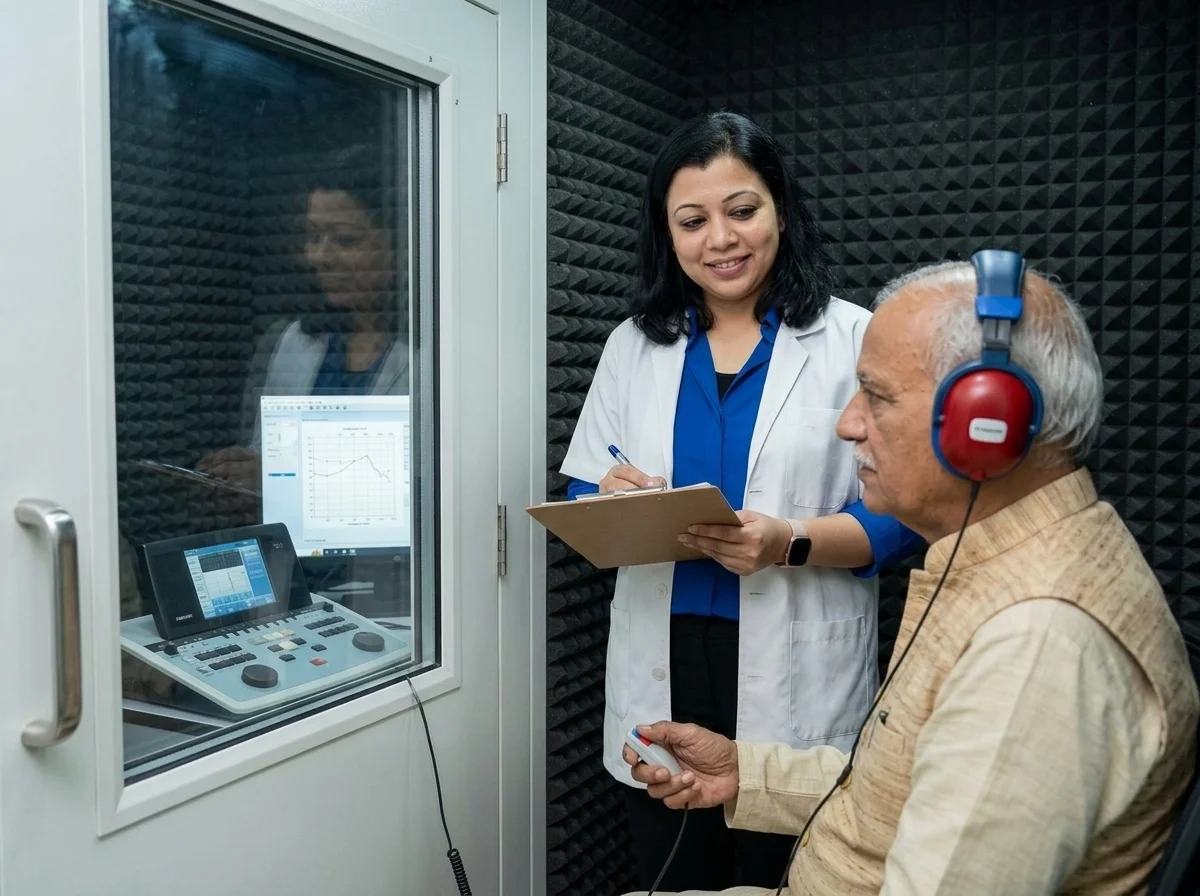
- Audiometry (hearing test): A pure tone audiometry test measures hearing thresholds across the frequency range. It is a core part of evaluating both tinnitus and vertigo, as it identifies whether there is an associated hearing loss and at which frequencies. Audiometry results help characterise the type of problem and guide management.
- Tympanometry: Assesses middle ear pressure and eardrum mobility, helping to identify fluid or pressure-related causes of tinnitus.
- Positional testing: For vertigo, specific head-movement tests are used to assess whether inner ear canal particles (BPPV) may be causing the episodes.
- Tuning fork tests: Quick clinical tests that help differentiate between conductive and sensorineural causes of the hearing or balance complaint.
Depending on the findings, further investigations such as vestibular function tests or imaging may be discussed. The goal of the evaluation is to identify what is driving the tinnitus or vertigo so that management can be directed at the right target — whether that is treating an ear infection, managing Meniere's disease, performing an Epley manoeuvre for BPPV, or addressing a hearing loss component.
Book a tinnitus or vertigo assessment at our Sector 49, Noida clinic
📅 Book Appointment 📞 Call Now 💬 WhatsApp 📍 DirectionsSame-day appointments usually available — Mon through Sun.
Frequently asked questions
Can tinnitus go away on its own?
In some cases, tinnitus related to a temporary cause — such as ear wax blockage, a short ear infection, or noise exposure — reduces significantly once the underlying cause is addressed. Tinnitus that has persisted for several weeks or is getting louder warrants an ENT assessment and a hearing test to determine the cause and discuss management options.
What is the difference between vertigo and dizziness?
Dizziness is a broad term for feeling unsteady, lightheaded or faint. Vertigo is a specific type of dizziness where there is a false sensation of movement — either the person feels they are spinning, or the surroundings appear to spin. Vertigo often has an inner ear origin, such as BPPV, vestibular neuritis or Meniere's disease. An ENT evaluation helps distinguish the cause.
Does everyone with tinnitus need a hearing test?
An audiometry hearing test is a routine and important part of evaluating tinnitus. It helps identify whether there is an associated hearing loss, and at what frequencies. This information guides the assessment and helps determine the likely origin of the tinnitus — whether it is related to the outer ear, middle ear, or inner ear pathway.
Is vertigo dangerous? When should I go to a doctor urgently?
Most vertigo episodes are not dangerous and have a treatable inner ear cause. However, you should seek prompt medical attention if vertigo is accompanied by sudden severe headache, double vision, difficulty speaking or swallowing, weakness in the face or limbs, or a new significant hearing loss — as these may indicate a neurological cause that needs urgent evaluation.