Septoplasty in Noida (Deviated Septum Surgery)
Septoplasty is a corrective surgical procedure that straightens a deviated nasal septum to restore clear, unrestricted airflow for patients struggling with chronic nasal obstruction.
Symptoms and when septoplasty is needed
The nasal septum is the wall of cartilage and bone dividing the two nostrils. When this septum is off-center or crooked — known as a deviated nasal septum (DNS) — it narrows one or both nasal passages. This structural deviation can interfere with normal breathing and sinus ventilation.
Common symptoms associated with a deviated septum include:
- Persistent nasal blockage or congestion, often worse on one side
- Recurrent nasal crusting or localized nosebleeds
- Frequent sinus headaches or facial pressure due to impaired drainage
- Chronic mouth breathing, dry throat upon waking, and noisy nighttime breathing
- Disrupted sleep quality or sleep apnea aggravation
Medical management tried before surgery
A deviated septum is a physical structural abnormality. However, initial evaluation always focuses on conservative medical management to reduce mucosal inflammation and clarify whether non-surgical options provide sufficient relief.
Targeted medical treatments may include:
- Prescription nasal corticosteroid sprays to reduce soft tissue swelling
- Antihistamines and allergy management for co-existing allergic rhinitis
- Isotonic saline nasal irrigations to clear secretions and maintain moist mucosa
Surgery is considered when persistent nasal obstruction continues to affect daily breathing, sleep, or sinus health despite an appropriate course of medical therapy.
How deviated septum surgery works & turbinate reduction
Septoplasty is performed entirely through the nostrils without any external skin cuts or visible bruising. During the procedure, internal incisions are made inside the nasal lining. The surgeon gently realigns, reshapes, or trims the crooked cartilage and bone, repositioning the septum into the midline to open the nasal airway.
Turbinate Reduction as a Related Procedure
In many patients with long-standing septal deviation, the soft tissue structures on the opposite side of the nose — known as inferior turbinates — become chronically enlarged (compensatory turbinate hypertrophy) to fill the extra space. If left unaddressed, enlarged turbinates can continue to cause nasal blockage even after the septum is straightened.
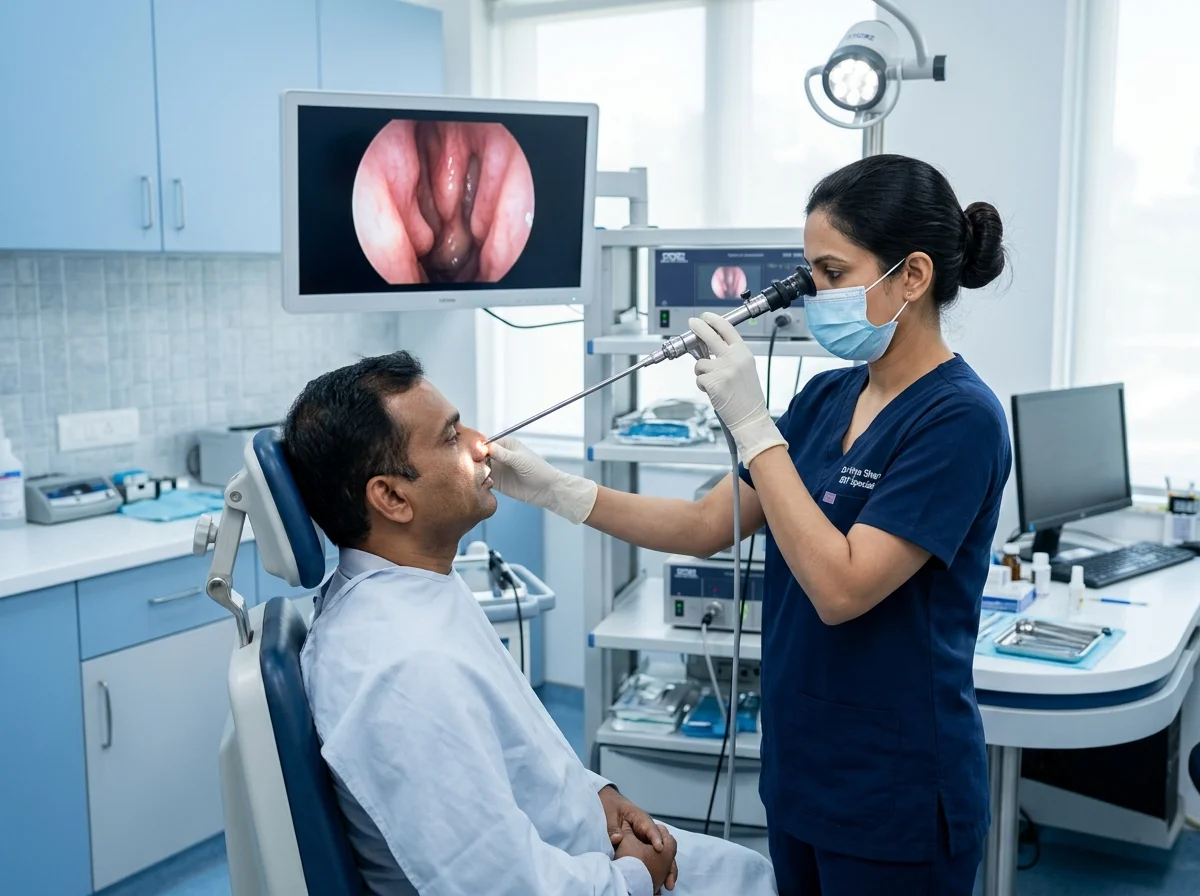
When indicated during diagnostic nasal endoscopy, a turbinate reduction (such as radiofrequency coblation or submucosal resection) is performed alongside septoplasty. This dual approach ensures both the bony-cartilaginous deviation and the soft tissue enlargement are corrected during a single day-care session.
Recovery and post-operative aftercare
Because septoplasty does not involve breaking external nasal bones, post-operative discomfort is generally mild and well-managed with standard prescribed analgesics.
- Initial Healing: Soft internal nasal splints or dissolvable packs may be used temporarily to support the septum into position.
- Saline Rinses: Gentle nasal saline sprays or irrigations are started as directed to keep the nasal passages clean and prevent crusting.
- Activity Restrictions: Patients are advised to avoid heavy physical exercise, heavy lifting, and vigorous nose blowing for 7 to 10 days.
- Return to Work: Most individuals resume desk work and daily routine activities within 3 to 5 days after surgery.
When to consult an ENT specialist
If you experience constant difficulty breathing through one or both nostrils, depend heavily on over-the-counter decongestant sprays, or suffer from recurring sinus infections, an ENT consultation and diagnostic nasal endoscopy can evaluate whether a deviated septum is the primary cause.
Frequently Asked Questions
What is the difference between septoplasty and rhinoplasty?
Septoplasty is a functional surgical procedure performed inside the nose to straighten a deviated septum and improve nasal breathing. Rhinoplasty is a cosmetic or structural procedure that alters the external shape or cosmetic appearance of the nose. Septoplasty does not change how your nose looks on the outside.
Will septoplasty change the external appearance of my nose?
No. Septoplasty is performed entirely inside the nasal cavity through internal incisions. It focuses strictly on restoring internal nasal alignment and airflow without altering the external shape or structure of the nose.
Is turbinate reduction performed along with septoplasty?
In many patients with chronic nasal blockage, enlarged inferior turbinates co-exist with a deviated septum. When indicated during endoscopic evaluation, turbinate reduction is performed during the same procedure to ensure both structural and tissue obstructions are treated effectively.
What is the hospital admission process and procedure cost?
Hospital admission details, day-care scheduling, room choices, and exact surgical estimates are discussed during consultation based on individual patient requirements and clinical evaluation.
Discuss nasal blockage & septoplasty options with Dr. Mitva
📅 Book Appointment 📞 Call Now 💬 WhatsApp 📍 DirectionsSame-day consultations usually available — Mon through Sun.